

Identity security has become one of the most heavily invested disciplines in enterprise cybersecurity. Organizations have deployed identity governance platforms, privileged access management tools, single sign-on solutions, and multi-factor authentication at scale. Analyst firms regularly rank it among the top security priorities. CISOs list it in their board presentations. Vendors compete fiercely for budget.
And yet, the average enterprise has a staggering identity security gap — one that most programs have barely begun to address.
The gap is not in human identity. The controls, frameworks, and tooling for managing employee and contractor access have matured considerably over the past decade. The gap is in non-human identity: the machines, applications, services, and automated processes that now represent the majority of identities in any modern environment — and that operate almost entirely outside the scope of traditional identity security programs. Non-human identities and machine identities are often used interchangeably in cybersecurity discussions; however, there is an important distinction: machine identities are a subset of non-human identities that refers to machines, applications, or workloads that authenticate using cryptographic credentials such as certificates, keys, or tokens.
Non-human and machine identity security is the problem that keeps growing while teams focus elsewhere. Closing this gap requires understanding what non-human identities are, why they are fundamentally different from human identities, and what a mature program to secure them actually looks like.
Understanding the Identity Security Gap
When security leaders talk about identity security, they typically mean governing who has access to what — mapping users to roles, enforcing least privilege, reviewing access periodically, and ensuring that when someone leaves the organization their access is revoked.
These are the right instincts. They are just being applied to a shrinking fraction of the actual identity landscape.
Before the advent of agentic AI, non-human identities — the machines, applications, services, and automated processes that authenticate using credentials such as certificates, keys, tokens, and secrets — already outnumbered human identities by an estimated 45 to 1. Last year, the ratio grew to 82 to 1, largely as a result of the broad rollout of AI and cloud native environments according to our partner CyberArk (now part of Palo Alto Networks). In large, cloud-native environments, that ratio is often far higher with ratios reaching 500:1 for certain companies. Even beyond AI, it’s not hard to see why machine identities are exploding: a single container orchestration cluster can generate thousands of service account tokens, a CI/CD pipeline may reference dozens of secrets, and a microservices architecture can involve hundreds of machine-to-machine authentication relationships, each backed by a certificate or API key.
None of these identities show up in your traditional identity governance dashboards. None of them are covered by your joiner-mover-leaver processes. In many organizations, these have never been reviewed, inventoried, or even acknowledged as identities at all.
That is the gap, and it is not a theoretical risk; unfortunately, it is one of the most actively exploited attack surfaces in modern cybersecurity.
Why Non-Human Identities Are Different — and Harder
The instinct, when organizations first recognize the non-human identity problem, is to apply the same frameworks they use for human identities. Provision, govern, review, revoke. The challenge is that non-human (machine) identities behave in fundamentally different ways that make traditional IAM approaches insufficient. Here are some of the unique characteristics of non-human identities:
- Machine identities are ephemeral and high-volume. A human employee might have a dozen access entitlements that change a few times a year. A containerized application environment can spin up and tear down thousands of identities per day. The volume and velocity are categorically different.
- Machine identities don’t expire the way human accounts do. When an employee leaves, HR drives the offboarding process. When a service account is created for a project that ends, there is often nothing to trigger its removal. SSH keys provisioned years ago persist indefinitely. API keys issued for a one-time integration continue to grant access long after the integration was deprecated.
- Machine identities are embedded in infrastructure, not managed through a portal. Human identities are managed in identity providers. Non-human identities are embedded in code, configuration files, CI/CD pipelines, cloud vaults, and application runtimes. Finding them requires fundamentally different discovery approaches.
- Machine identities often carry excessive privilege by default. Service accounts provisioned by development teams frequently receive broad permissions because it is faster and easier than scoping them precisely. API keys are issued at the platform level rather than the resource level. A compromised non-human identity can often access far more than the specific function it was intended to serve.
- Machine identities are invisible to many security controls. EDR tools monitor endpoint behavior tied to human users. SIEM alerts are typically configured around human activity patterns. Identity governance platforms are built around directory objects. Non-human identities operate in the gaps between these controls.

Understand your non-human identities and secure them.
Connect with an Identity Security Expert
Four Types of Non-Human Identity Risk
Understanding where to focus requires mapping the specific categories of non-human identity and the distinct risks each carries. There are four primary categories of non-human or machine identities that require management:
Certificates and PKI
TLS/SSL certificates authenticate servers, encrypt communications, and underpin trust across your entire infrastructure. Every certificate has an expiry date. When that date passes unmanaged — and in large environments with thousands of certificates, it frequently does — the result is service outages, broken integrations, and degraded security posture.
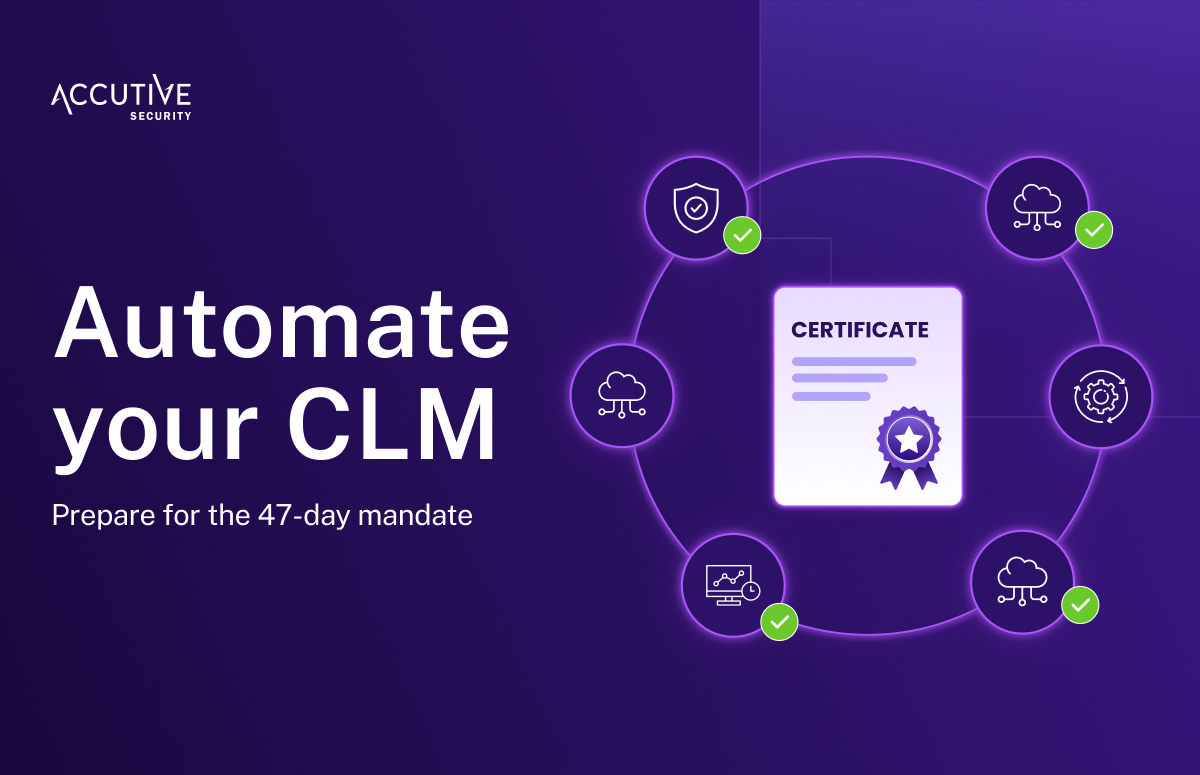
The risk is intensifying. Public certificate validity periods are being cut in half in 2026 as part of the CA/Browser Forum push toward 47 day lifecycles by 2029. Organizations that rely on manual certificate tracking cannot maintain this pace. Automated certificate lifecycle management is no longer a best practice, it is a prerequisite for operational resilience.
Beyond expiry, certificate risk includes weak key lengths, certificates issued from unauthorized or shadow certificate authorities, and failure to revoke certificates when systems are decommissioned or credentials are compromised.
Secrets
Secrets, which include passwords, API keys, tokens, database credentials, and other sensitive configuration values, are the connective tissue of modern application infrastructure. Every application needs credentials to connect to databases, call APIs, access cloud services, and communicate with other services. How those secrets are stored, accessed, and managed determines whether they are a controlled asset or a scattered liability.
The most common failure mode is hardcoding: secrets embedded directly in source code, configuration files, or container images. Once hardcoded, secrets rarely change and persist across code reviews, repository forks, and system migrations.
Even secrets that are not hardcoded are frequently over-privileged, under-rotated, and inadequately audited.
This accumulation of uncontrolled secrets long after the systems they authenticated have been decommissioned is referred to as secrets sprawl. Secrets sprawl is now a major contributor to modern data breaches, particularly as attackers increasingly exploit exposed credentials rather than software vulnerabilities. Studies have found that over 60–70% of leaked secrets remain valid after exposure, often persisting for months or even years without rotation.
A secrets management program is necessary to combat secrets sprawl and reduce the risk of stolen credentials.
SSH Keys
SSH keys provide powerful, persistent access to servers and infrastructure. Unlike passwords, they do not expire. Unlike certificates, they often lack a centralized authority that tracks their issuance and use. SSH keys provisioned for legitimate purposes — a specific project, a contractor engagement, an automated process — frequently outlive their original use case and continue to grant access indefinitely.
The threat model for SSH key sprawl is particularly concerning because SSH access is often privileged access. Root-level SSH keys that are not inventoried represent a persistent, privileged backdoor into your environment that exists entirely outside your privileged access management program.
Cryptographic Keys and HSMs
At the foundation of all non-human identity security are the cryptographic keys that underpin encryption, certificate issuance, and secrets management itself. The security of the entire stack depends on how these keys are generated, stored, and managed.
Hardware Security Modules (HSMs) represent the gold standard for key protection: HSMs are purpose-built hardware that generates and stores keys in tamper-resistant environments from which they cannot be extracted. Conversely, Key Management Systems (KMS) provide the governance and operational layer: policies, rotation schedules, access controls, and audit trails. HSMs and KMS are often confused, but serve different purposes within the enterprise security stack.
A gap at this layer has cascading implications. Weak key generation practices undermine certificate security. Inadequate key storage puts encrypted data at risk. Absence of rotation policies means keys that may have been compromised continue to be trusted.
Building a Non-Human Identity Security Program
Closing the identity security gap requires a program, not a point solution. An effective non-human identity security program requires attention to both technology and process.
The Core Technology Stack
Before outlining the phases, it is worth being explicit about the technologies that underpin a non-human identity security program. Unlike human IAM — which is largely served by a single identity provider and a PAM solution — non-human identity security requires a purpose-built stack across several distinct domains:
Certificate Lifecycle Management (CLM) Solution
A dedicated platform for discovering, tracking, renewing, and revoking certificates across your environment. As certificate lifespans shrink toward 47 days, CLM automation is no longer optional — it is an operational requirement. See our Certificate Lifecycle Management services and 5-Step PKI + CLM Solution Selection guide.
Modern PKI Platform
The certificate authority infrastructure that issues and manages digital certificates for machines, services, and devices. Modern PKI platforms — whether on-premises, cloud-based, or delivered as PKI-as-a-Service — provide the governance layer for certificate issuance policy, chain of trust, and CA hierarchy. See our PKI services overview and Guide to PKIaaS.
Hardware Security Module (HSM)
The cryptographic foundation of the entire stack. HSMs generate and store private keys in tamper-resistant hardware, ensuring that the keys underpinning your certificates, encrypted data, and code signing operations cannot be extracted — even by privileged insiders. See our HSM services and HSM vs. KMS guide.
Secrets Management Platform
A centralized vault for storing, accessing, rotating, and auditing the credentials, API keys, tokens, and configuration secrets used by applications and pipelines. The goal is to eliminate hardcoded and static secrets entirely, replacing them with dynamic, short-lived credentials issued at runtime. See our Secrets Management services.
SSH Key Management Solution
For organizations with significant SSH key sprawl, a dedicated SSH key management solution provides the discovery, inventory, access control, and rotation capabilities that ad hoc key management cannot. Many organizations are also evaluating migration from long-lived SSH keys toward short-lived SSH certificates as a more governable alternative. See our SSH Key Management vs. SSH Certificates guide for a comparison of the tradeoffs.
Not every organization will need all five components simultaneously — prioritization depends on your current risk profile and the findings of your discovery phase. But understanding the full stack is essential for building a program with no blind spots.
A 4-Phase Approach to Building a Non-Human Identity Security Program
Building a strong non-human identity security program requires an in-depth discovery phase, which can uncover the extent of the problem and help prioritize technology investments.
Phase 1: Discover and Inventory
You cannot govern what you cannot see. The first phase of any non-human identity program is comprehensive discovery: finding every certificate, key, secret, and token across your environment, regardless of where it lives.
This means scanning on-premises infrastructure, cloud environments, CI/CD pipelines, container registries, code repositories, and application runtimes. It means identifying certificates issued from both external CAs and internal certificate authorities, including any shadow CAs that may have been stood up without central governance.
The output of the discovery phase is a living inventory, think of it as your cryptographic bill of materials, that becomes the foundation for everything that follows.
Phase 2: Assess and Prioritize Risk
With inventory in hand, the next step is risk assessment: understanding which non-human identities represent the highest risk based on privilege level, expiry status, storage method, and coverage by existing controls.
This typically reveals a small number of critical findings that warrant immediate remediation, alongside a broader risk register that drives the prioritized roadmap. The goal is clarity on where to focus first, not perfection across the entire landscape simultaneously.
Phase 3: Implement Controls
Control implementation proceeds in layers, typically starting with the highest-risk categories identified in the assessment:
- For certificates: deploy automated certificate lifecycle management that tracks every certificate, monitors for expiry, automates renewal, and enforces governance policies around issuance.
- For secrets: centralize into a dedicated secrets management platform, eliminate hardcoded credentials, and move toward dynamic secrets with short lifespans and automatic expiry.
- For SSH keys: inventory all keys, establish ownership, revoke orphaned keys, and evaluate migration toward short-lived SSH certificates.
- For cryptographic keys: establish HSM-backed key generation and storage for critical applications, with a KMS providing rotation schedules and access controls.
Phase 4: Automate and Govern
The goal of a mature program is continuous, automated management — not periodic manual reviews. This requires integrating non-human identity controls into the development and deployment lifecycle so that secrets are never hardcoded, certificates are never manually tracked, and new machine identities are provisioned and governed from day one.
Governance policies that dictate who can issue certificates, from which CAs, with what key parameters, which teams can access which secrets, and how long keys are valid before mandatory rotation help to codify the rules that automation then enforces consistently at scale.
Being Proactive about Quantum
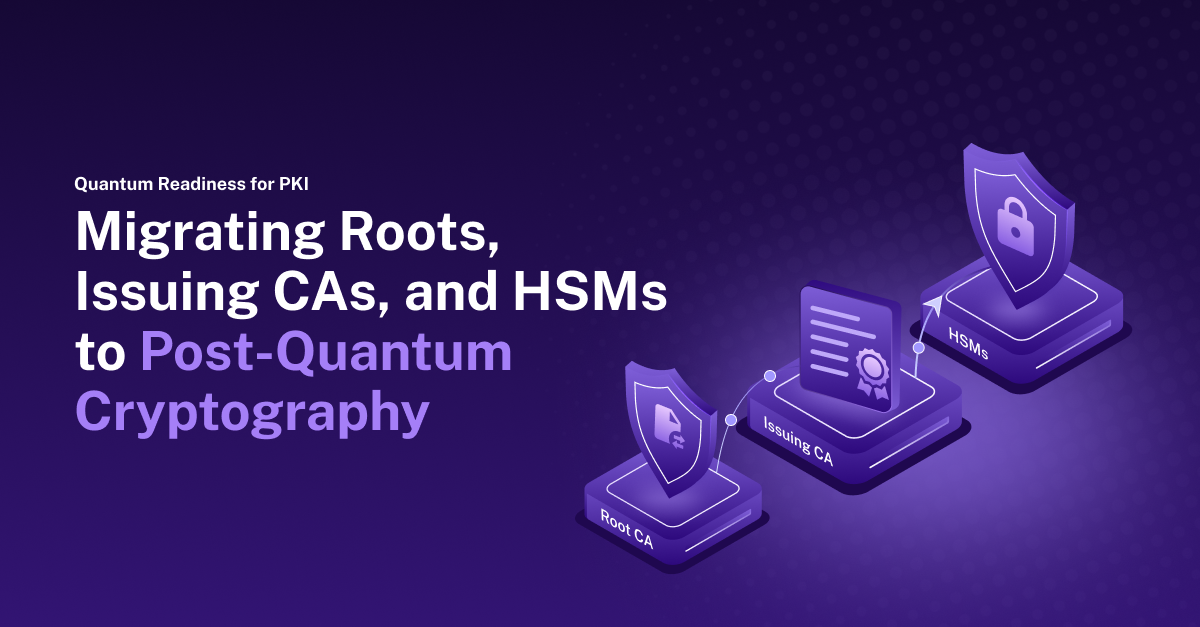
Any discussion of non-human identity security must acknowledge the post-quantum cryptography horizon. The asymmetric cryptographic algorithms that underlie most machine identity infrastructure, including RSA, Elliptic Curve Cryptography, Diffie-Hellman, are mathematically vulnerable to cryptographically relevant quantum computers.
National standards bodies, such as NIST, finalized the first post-quantum cryptographic standards in 2024. The migration timeline is not years away. For forward-looking organizations, the switch to quantum-resistant cryptography is already underway. Cybersecurity experts warn that nation-state bad actors are conducting “harvest now, decrypt later” attacks, collecting encrypted traffic today with the intention of decrypting it once quantum computing capability matures.
Organizations without a comprehensive non-human identity inventory cannot even begin to assess their post-quantum exposure, let alone plan a migration. Investing in non-human identity security today builds the foundation for post-quantum readiness tomorrow.
What Effective Machine Identity Security Looks Like
A mature machine or non-human identity security program typically has the following characteristics:
- Complete visibility: every certificate, key, secret, and token is inventoried in a continuously updated registry — nothing operates in the shadows
- Automated lifecycle management: certificates renew automatically before expiry, secrets rotate on schedule or dynamically at runtime
- Least privilege enforcement: non-human identities carry only the permissions required for their specific function
- HSM-backed cryptographic foundations: critical keys are generated and stored in hardware, not software
- Governance and policy enforcement: clear policies govern issuance, use, rotation, and revocation — enforced programmatically, not through manual review
- Integration with the development lifecycle: security is embedded in how applications are built and deployed, not bolted on afterward
Getting Started
Unfortunately, organizations often reach out to our team about non-human identity security after an incident, such as an outage from an expired certificate, a breach traced to a hardcoded credential, a penetration test finding that exposed SSH key sprawl. The reality is that starting after an incident means starting your non-human identity security program as a rapid reactive response.
The better path is a proactive assessment: a structured exercise that establishes current state, identifies the highest-risk gaps, and produces a prioritized roadmap. Most organizations are surprised by what the assessment reveals — not because the risks are exotic, but because they have simply never looked. Taking a proactive approach to non-human identities reduces costs and operational strain by enabling a thoughtful, phased rollout of the highest priority programs first.
Identity security programs that stop at human identity are incomplete. The machines in your environment have identities too — and right now, most of them are unsecured.





Leave a Reply