Quantum-Safe Cryptography, Identity Security and Data Protection for the Public Sector
Federal agencies in the United States and Canada are working against published deadlines to inventory their cryptography and migrate to post-quantum standards. Most of them are discovering that they do not have a clear picture of where their keys, certificates and algorithms actually live.
Available through the cybersecurity partners you already work with
We work through established government resellers and distributors, so in most cases you can contract through a supplier your agency already has in place. Tell us who holds your paper and we will take it from there.
Procurement and Distribution Partners
Delivering as a subcontractor to an existing prime or systems integrator is also an option on most engagements.
The migration deadlines are already in motion
Post-quantum migration has moved from guidance to schedule. Agencies on both sides of the border now have published milestones, and the early phases are about discovery rather than replacement, which is where most organizations find they are behind.
United States
Executive Order 14412 and OMB Memorandum M-26-15, both issued in June 2026, require every executive agency to submit a PQC Migration Plan within 120 days. Plans must align to NIST IR 8547, and the phased milestones run through 2035, with high-value assets and high-impact systems moving first.
Canada
The Canadian Centre for Cyber Security published ITSM.40.001 in June 2025, setting a roadmap for all federal departments. Initial migration plans were due in April 2026, with annual progress reporting from that point, high-priority systems migrated by the end of 2031, and all remaining non-classified systems by the end of 2035.
The hard part is rarely the algorithms. It is knowing what you have. Most agencies cannot produce a complete picture of their certificates, keys, hardware security modules and embedded cryptography without doing the discovery work first, and that inventory is what every subsequent milestone depends on.
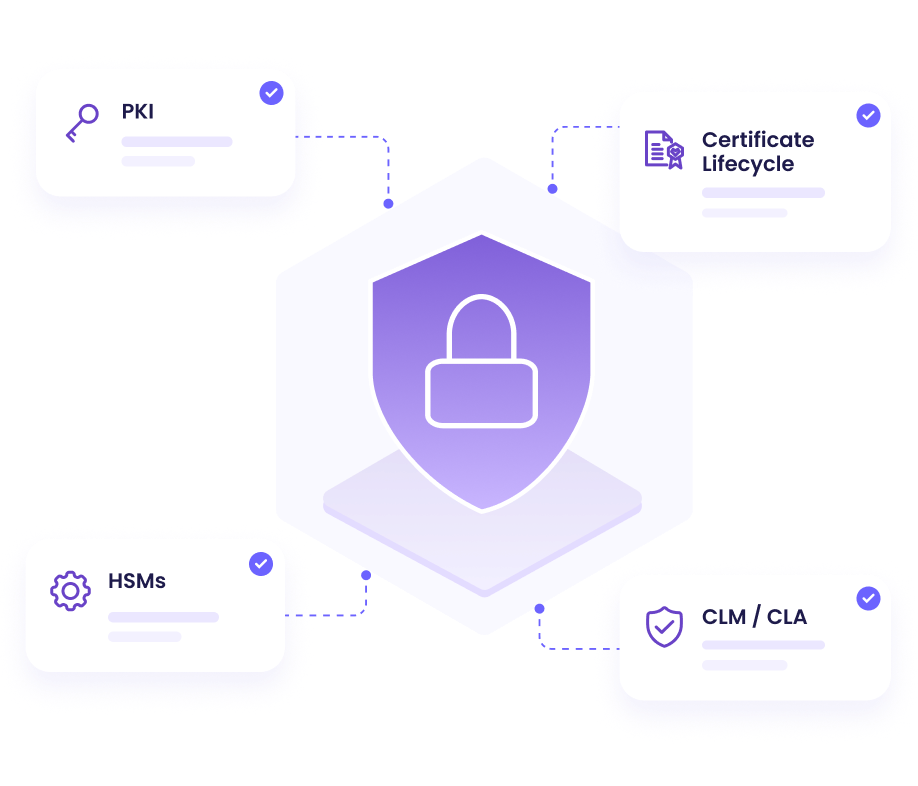
Building a secure cryptographic framework to ward off cyber threats, using the cryptographic triad:
Public Key Infrastructure (PKI) Verify the identity of individuals and machines on your network using digital certificates and protect your highly sensitive data from being compromised
Certificate Lifecycle Management / Automation (CLM/CLA) Prevent outages and stay compliant. We offer CLM/CLA solutions aligned with all leading regulatory frameworks to ensure your digital certificate lifecycle is seamlessly managed and automated.
Key Management, including Hardware Security Modules (HSMs) The foundation of trust and the enabler of PKI by providing + guarding your cryptographic keys.
Public sector organizations, including government departments and agencies house large amounts of
highly sensitive PII, financial data and classified / confidential materials that are an ideal target for
cybercriminals
Vast Quantities of Data
Public sector organizations interact with vast quantities of data that must be protected. Additionally, public sector entities must adhere to strict standards and regulations about the use and storage of data. Ransomware attacks, data breaches, and evolving cyber risks threaten the public, employees, and stakeholders.
Budgetary Restrictions
It can be challenging to procure a robust cybersecurity solutions within stringent public sector budgets. Fortunately, Accutive Security offers a broad range of scalable solutions to fit your budget.
Navigating Regulatory Compliance
Public sector organizations answer to overlapping federal, state and provincial requirements, and those obligations keep expanding. Post-quantum migration is the newest of them, and it arrives on top of everything already in place. We build to the frameworks your auditors are actually testing against.
High Stakes Data
A breach in the public sector is not only a financial event. Citizen records, benefits data, law enforcement information and classified material carry consequences that extend well beyond remediation costs, and the trust lost is difficult to rebuild.
Identity and Access Management (IAM) for the Public Sector
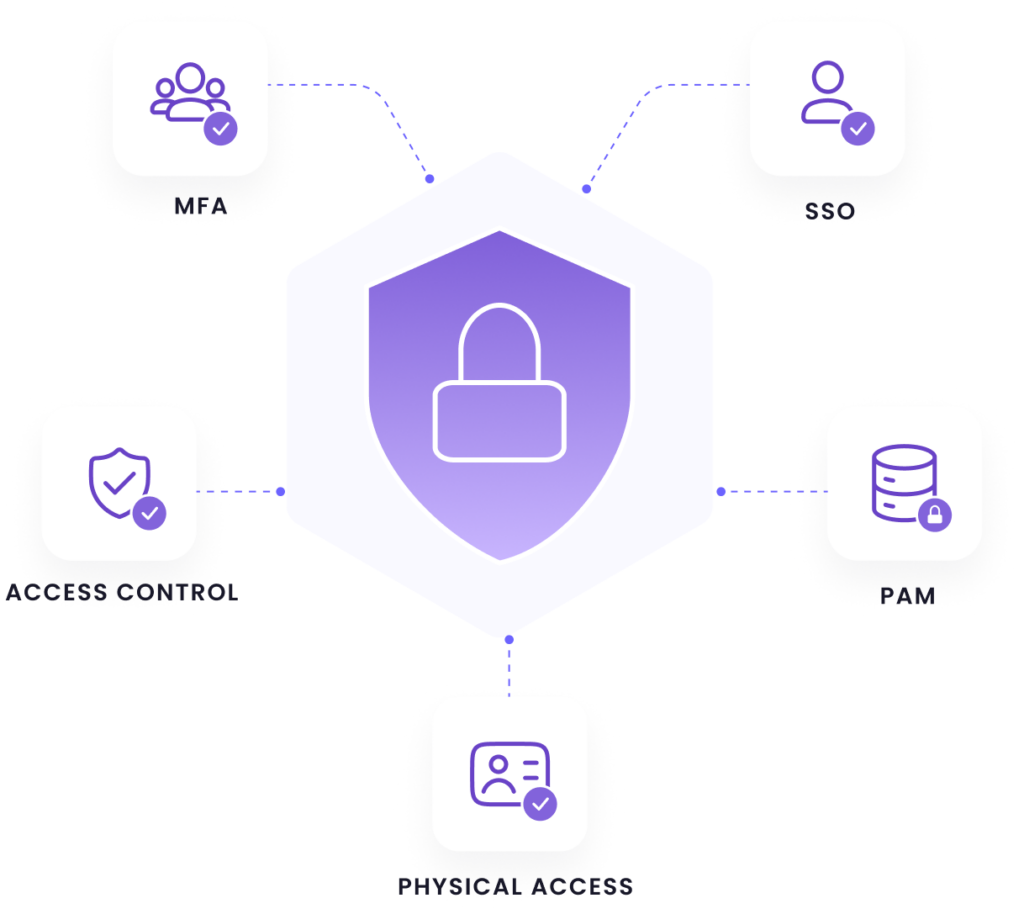
A robust Identity and Access Management framework prevents unauthorized access to highly sensitive financial, health and personal information. We work with public sector entities, including government agencies to build robust compliant IAM frameworks including:
Multi Factor Authentication (MFA)
Single Sign On (SSO) Reduce credential fatigue for staff while maintaining a single, auditable point of access control.
Access Control Role-based access control and Attribute-based access control for compliance
Privileged Access Management (PAM) to provide oversight over ‘privileged’ accounts such as administrator accounts to prevent breaches
Built to the frameworks your auditors test against
Our public sector work aligns to FIPS 140-3, FIPS 203, 204 and 205, NIST SP 800-53, NIST SP 800-171, NIST IR 8547, FISMA and CJIS requirements in the United States, and to ITSG-33, ITSM.40.001 and Protected B requirements in Canada. We also support agencies preparing for FedRAMP, StateRAMP and CMMC assessments.