

Data breaches are no longer isolated incidents; they are occurring constantly, making them a strategic operational risk. With sensitive data moving across cloud platforms, SaaS applications, third-party vendors, AI systems, and increasingly, across jurisdictions, the attack surface has exploded. According to IBM’s 2025 Cost of a Data Breach Report, the global average cost of a data breach now stands at $4.44 million. Moreover, the nature of the threat itself shifted dramatically. One in six breaches now involves AI-driven attacks, typically used to scale phishing and social engineering campaigns, while 97% of AI-related breaches occurred in organizations where proper access controls were missing.
The regulatory response has been equally aggressive. Governments worldwide have expanded data privacy obligations at an accelerated pace, and major frameworks are now active across the EU, North America, APAC, and the Middle East — each with its own scope, enforcement model, and technical expectations.
This guide covers some of the most consequential data privacy regulations in effect as of 2026: what they require, who they apply to, and what organizations operating across these jurisdictions need to understand.
Major Data Privacy Regulations in 2026: What Every Security Leader Needs to Know
For nearly a decade, GDPR led the way and functioned as the de facto global standard for data privacy. Organizations built their compliance programs around it, and regulators in other jurisdictions borrowed heavily from its principles. That era of relative centralization is over.
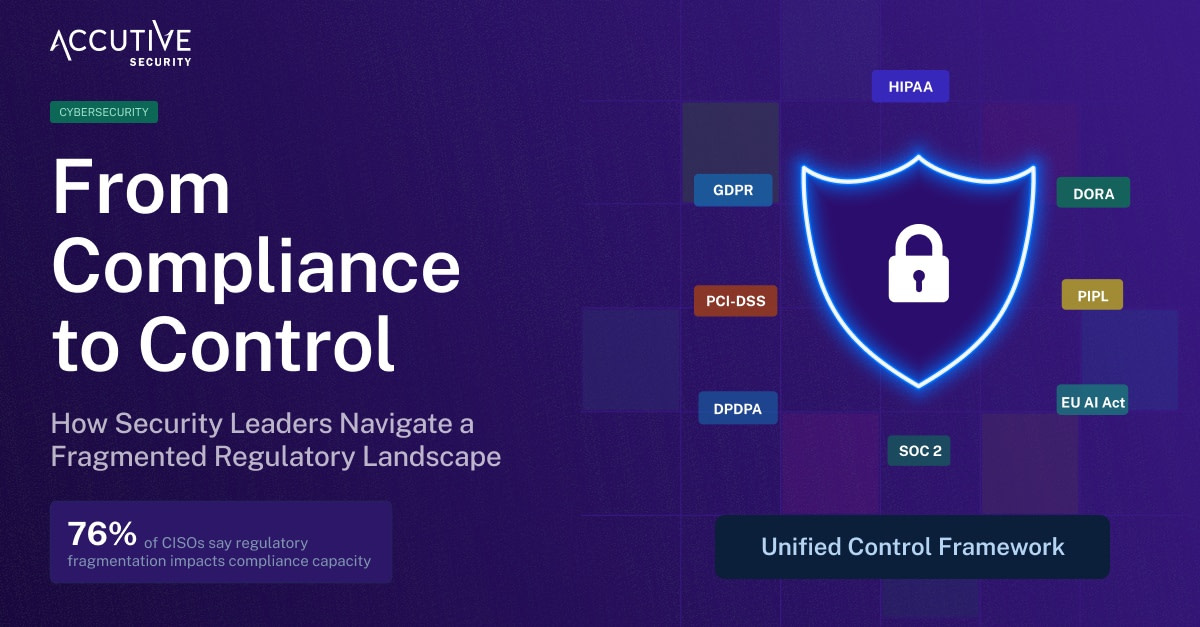
Today, the regulatory landscape has fragmented along regional, sectoral, and operational lines. New frameworks are not simply extensions of GDPR; they introduce distinct definitions, conflicting obligations, independent enforcement authorities, and technical requirements that GDPR never anticipated. Understanding this fragmentation is the first step toward building a compliance architecture that can operate across it.
The regulations below represent the frameworks most relevant to organizations operating in North America, Europe, and across APAC and the Middle East, the geographies where enforcement activity and compliance complexity are highest.
European Union (EU) Regulations
Insight: GDPR remains the baseline, but the EU has layered operational, sectoral, and technology-specific frameworks on top of it. European compliance in 2026 means aligning with multiple overlapping obligations simultaneously.
General Data Protection Regulation (GDPR)
In effect: May 2018
What it is: The foundational EU regulation governing the collection, processing, storage, and transfer of personal data of EU residents. It established the global template for data subject rights, lawful basis requirements, and cross-border transfer controls.
Who it applies to: Any organization, regardless of geographic location, that processes the personal data of EU residents.
Key obligations: Lawful basis for processing; explicit consent where required; data subject rights (access, erasure, portability, objection); Data Protection Officer appointment for certain organizations; breach notification within 72 hours; Data Protection Impact Assessments (DPIAs) for high-risk processing; restrictions on cross-border data transfers.
Enforcement status: Fully enforced. GDPR fines have exceeded €5.88 billion since 2018. The European Commission has proposed targeted simplifications under the EU Omnibus package in 2026, primarily reducing administrative burden for smaller enterprises while core protections remain unchanged. The EU-UK adequacy decision was renewed in December 2025, ensuring lawful data transfers until 2031.
Digital Operational Resilience Act (DORA)
In effect: January 2025
What it is: A regulation specifically designed for the financial sector, mandating that financial entities and their critical ICT third-party providers maintain operational resilience against technology disruptions and cyberattacks.
Who it applies to: Banks, insurance companies, investment firms, payment processors, and their critical ICT service providers operating within the EU.
Key obligations: ICT risk management frameworks; incident classification and reporting; digital operational resilience testing (including threat-led penetration testing); third-party ICT risk management; contractual requirements for ICT service providers; cryptographic key management controls.
Enforcement status: In force since January 17, 2025. Financial regulators across EU member states are actively supervising compliance.
EU AI Act
In effect: August 2024 (phased enforcement)
What it is: The world’s first comprehensive legal framework governing artificial intelligence systems. It classifies AI systems by risk level and imposes obligations proportionate to that risk, from transparency requirements for limited-risk systems to strict conformity assessments for high-risk applications.
Who it applies to: Any organization developing, deploying, or using AI systems within the EU, regardless of where the organization is based.
Key obligations: Prohibition of unacceptable-risk AI practices (effective February 2025); risk assessments and activity logging for high-risk AI systems; human oversight requirements; transparency obligations for AI-generated content; AI literacy measures for organizations deploying AI systems.
Enforcement status: Prohibited practices enforcement began February 2025. Full enforcement for high-risk systems takes effect August 2026. Non-compliance carries fines of up to 7% of global annual turnover, higher than GDPR’s 4% ceiling
Network and Information Security (NIS) 2 Directive
In effect: October 2024
What it is: The revised NIS directive, significantly expanding the scope of cybersecurity obligations across critical infrastructure and essential services in the EU.
Who it applies to: A substantially broader set of entities than its predecessor, including energy, transport, healthcare, digital infrastructure, managed service providers, and public administration.
Key obligations: Cybersecurity risk management measures; supply chain security; encryption and access control requirements; incident reporting within 24 hours (initial notice) and 72 hours (detailed report); senior management accountability for cybersecurity compliance.
Enforcement status: EU member states were required to transpose NIS 2 into national law by October 17, 2024. While active enforcement is now live, implementation is fragmented; many member states face infringement procedures for delays, though national authorities are actively auditing.
electronic IDentification, Authentication, and trust Services (eIDAS) 2.0
In effect: 2024 (implementation ongoing)
What it is: The updated electronic identification and trust services regulation, introducing the EU Digital Identity Wallet and expanding requirements for qualified electronic signatures, certificates, and trust service providers.
Who it applies to: Public sector entities, trust service providers, and organizations that rely on digital identity verification and electronic signatures within the EU.
Key obligations: Acceptance of EU Digital Identity Wallets by large online platforms and public services; qualified certificate requirements; enhanced standards for certificate authorities and PKI infrastructure; cross-border mutual recognition of digital identities.
Enforcement status: Framework regulation adopted. Member state implementation of the EU Digital Identity Wallet infrastructure is actively underway. Directly relevant to organizations managing PKI, certificate infrastructure, and digital identity systems.
United States Regulations
Insight: The absence of a federal privacy law has produced the opposite of simplicity. Organizations operating across multiple US states now face a mosaic of independently enforced frameworks — each with different applicability thresholds, rights structures, and technical obligations.
California Privacy Rights Act (CPRA) / California Consumer Privacy Act (CCPA)
In effect: CCPA January 2020; CPRA January 2023
What it is: California’s comprehensive consumer privacy law, significantly strengthened by CPRA, which created an independent enforcement agency, the California Privacy Protection Agency (CPPA), and expanded consumer rights beyond the original CCPA framework.
Who it applies to: Businesses that collect personal data of California residents and meet at least one of: $25M+ annual gross revenue; buy, sell, or share personal data of 100,000+ consumers or households; or derive 50%+ of annual revenue from selling personal data.
Key obligations: Consumer rights to access, deletion, correction, and portability; opt-out of sale or sharing of personal data; right to limit use of sensitive personal information; mandatory privacy risk assessments for high-risk processing; automated decision-making opt-out rights; data minimization requirements.
Enforcement status: CPPA actively enforcing. Final regulations on automated decision-making technology and cybersecurity audits were approved in September 2025, effective January 2026. California remains the most aggressively enforced state privacy framework in the US.
US State Privacy Law Wave
In effect: Varies by state, 2023–2026
What it is: A rapidly expanding set of comprehensive state-level privacy laws enacted independently across the US in the absence of federal legislation. While these laws share structural similarities with CCPA, each contains distinct applicability thresholds, rights frameworks, and exemptions.
Active frameworks include: Virginia Consumer Data Protection Act (VCDPA); Colorado Privacy Act (CPA); Connecticut Data Privacy Act (CTDPA); Texas Data Privacy and Security Act (TDPSA); Minnesota Consumer Data Privacy Act (effective July 2025); Maryland Online Data Privacy Act (effective October 2025); Indiana Consumer Data Protection Act (effective January 2026).
Key obligations (common across frameworks): Consumer rights to access, correct, delete, and port personal data; opt-out of targeted advertising and profiling; data protection assessments for high-risk processing; processor contractual requirements; privacy notices.
Enforcement status: Eight state laws took effect in 2025 alone. Three additional laws became effective January 1, 2026. Nine states amended their existing laws in 2025. Organizations operating nationally cannot achieve compliance through a single state framework, multi-state compliance mapping is now a baseline operational requirement.
Health Insurance Portability and Accountability Act (HIPAA) / HITECH
In effect: HIPAA 1996; HITECH 2009; ongoing enforcement
What it is: The foundational US healthcare data protection framework, governing the privacy and security of protected health information (PHI). HITECH strengthened breach notification requirements and significantly increased penalties for non-compliance.
Who it applies to: Covered entities (healthcare providers, health plans, healthcare clearinghouses) and their business associates that handle PHI.
Key obligations: Administrative, physical, and technical safeguards for PHI; encryption requirements for data at rest and in transit; access controls and audit logging; breach notification within 60 days; Business Associate Agreements (BAAs) with third-party vendors.
Enforcement status: HHS Office for Civil Rights maintains active enforcement. Healthcare remains the most expensive sector for data breaches globally at $7.42 million average per breach according to IBM’s 2025 report, driven in part by the cost of HIPAA non-compliance penalties and remediation requirements.
Payment Card Industry Data Security Standard (PCI-DSS 4.0)
In effect: April 2025
What it is: The current version of the payment card industry’s security standard, governing how organizations store, process, and transmit cardholder data. PCI-DSS 4.0 introduced strengthened requirements for cryptography, multi-factor authentication, and secrets management.
Who it applies to: All organizations that store, process, or transmit payment card data; merchants, payment processors, service providers, and financial institutions globally.
Key obligations: Encryption of cardholder data at rest and in transit; MFA for all access to the cardholder data environment; secrets management for application credentials; regular cryptographic key rotation; network segmentation; penetration testing; updated requirements for web-facing application security.
Enforcement status: Mandatory compliance since April 2025. Non-compliance can result in fines, card brand penalties, and termination of payment processing privileges.
APAC & Middle East Regulations
Insight: Data sovereignty is now a global architectural constraint. Localization requirements, cross-border transfer restrictions, and independent enforcement regimes are now the norm across APAC and the Middle East, requiring organizations to design data residency and access controls into their infrastructure, not retrofit them.
Digital Personal Data Protection Act (DPDPA)|India
In effect: August 2023 (enforcement underway 2025)
What it is: India’s comprehensive data protection law, replacing the long-pending Personal Data Protection Bill. The DPDPA establishes a framework for the processing of digital personal data, individual rights, and cross-border data transfer controls, governed by a newly established Data Protection Board.
Who it applies to: Organizations processing digital personal data of Indian residents, both within India and outside India where data is processed in connection with offering goods or services to Indian residents.
Key obligations: Consent-based processing with clear notice requirements; data principal rights (access, correction, erasure, grievance redress); purpose limitation and data minimization; data localization requirements for certain categories; breach notification to the Data Protection Board and affected individuals; children’s data protections.
Enforcement status: Implementing rules issued in 2025 with enforcement now underway. Penalties can reach ₹250 crore (approximately $30 million USD) per violation. Replaces the PDPB referenced in earlier versions of this guide; organizations relying on pre-2023 compliance assessments for India need to reassess against DPDPA.
Personal Information Protection Law (PIPL)|China
In effect: November 2021
What it is: China’s comprehensive personal information protection law, widely regarded as one of the most stringent data privacy frameworks globally. PIPL imposes strict controls on the collection, processing, and cross-border transfer of personal information of Chinese residents.
Who it applies to: Organizations processing personal information of individuals within China, and organizations outside China that process personal information of Chinese residents in connection with providing products or services to them.
Key obligations: Separate consent for each processing purpose; strict cross-border data transfer controls (security assessments, standard contracts, or certification required); data localization requirements for critical information infrastructure operators; appointment of a personal information protection officer; annual compliance audits for large-scale processors.
Enforcement status: Fully enforced. Cross-border transfer certification measures became effective January 2026. Organizations transferring data out of China must comply with one of three approved mechanisms, a requirement with direct architectural implications for multinational enterprises.
Lei Geral de Proteção de Dados (LGPD) | Brazil
In effect: September 2020 (enforcement 2021)
What it is: Brazil’s comprehensive data protection law, closely modeled on GDPR in structure and principle. It establishes a legal basis framework for data processing, data subject rights, and a national data protection authority, the ANPD.
Who it applies to: Any organization that processes personal data of individuals located in Brazil, regardless of where the organization is based, if the processing occurs in Brazil, the data subject is in Brazil, or the data originated in Brazil.
Key obligations: Legal basis for all processing activities; data subject rights (access, correction, deletion, portability, information about sharing); data protection officer appointment; security measures proportionate to risk; breach notification; cross-border transfer restrictions.
Enforcement status: ANPD actively enforcing. An EU adequacy decision for Brazil is expected in the near term, which would significantly simplify EU-Brazil data transfers for multinational organizations.
Personal Data Protection Act (PDPA) | Singapore
In effect: 2012 (significantly amended 2021)
What it is: Singapore’s primary data protection legislation, governing the collection, use, and disclosure of personal data by private sector organizations. The 2021 amendments introduced mandatory breach notification, increased financial penalties, and new data portability obligations.
Who it applies to: Private sector organizations operating in Singapore that collect, use, or disclose personal data.
Key obligations: Consent for collection, use, and disclosure; purpose limitation; data accuracy and retention limits; data protection officer designation; mandatory breach notification within 3 days for significant breaches; data portability on request; do-not-call registry compliance.
Enforcement status: Personal Data Protection Commission actively enforcing. Maximum financial penalty increased to SGD 1 million or 10% of annual turnover in Singapore, whichever is higher.
Personal Data Protection Decree (PDPD) | Vietnam
In effect: July 2023 (Decree 13); superseded by PDPL January 2026
What it is: Vietnam’s comprehensive personal data protection framework, significantly strengthened with the Personal Data Protection Law (PDPL) that came into force January 1, 2026, one of the most recent major privacy laws to take effect globally.
Who it applies to: Organizations processing personal data of Vietnamese residents, including foreign organizations providing goods or services in Vietnam.
Key obligations: Explicit consent for processing; data localization requirements for certain categories; cross-border transfer restrictions with government approval mechanisms; mandatory data protection impact assessments; breach notification obligations.
Enforcement status: The PDPL took effect January 1, 2026. Organizations with operations or customer bases in Vietnam are in the early stages of assessing compliance requirements under the new law.
Personal Data Protection Law (PDPL) | United Arab Emirates
In effect: January 2022 (enforcement January 2023)
What it is: The UAE’s federal data protection law, establishing a comprehensive framework for the processing of personal data, closely aligned in structure with GDPR. It is supplemented by free zone-specific regimes, including the DIFC Data Protection Law, which maintains its own independent framework.
Who it applies to: Organizations processing personal data in the UAE or processing personal data of UAE residents from outside the country.
Key obligations: Lawful basis for processing; data subject rights (access, correction, deletion); privacy notice requirements; data protection officer appointment for certain organizations; cross-border transfer controls; breach notification.
Enforcement status: UAE Data Office actively enforcing. The Middle East more broadly is rapidly adopting GDPR-aligned frameworks, organizations entering the region should anticipate equivalent standards across multiple jurisdictions.
Personal Data Protection Law (PDPL) | Saudi Arabia
In effect: September 2023 (full enforcement September 2024)
What it is: Saudi Arabia’s first comprehensive data protection law, issued under Royal Decree No. M/19 and amended in 2023. Regarded as one of the most comprehensive privacy legislations in the region, the PDPL applies to all entities that process the personal data of Saudi citizens or residents. Notably, the law extends its protections beyond an individual’s lifetime, safeguarding personal data even after death, a provision unique among global privacy frameworks.
Who it applies to: All public and private entities operating within Saudi Arabia, as well as organizations outside the Kingdom that process the personal data of Saudi residents with no requirement to be specifically targeting or monitoring those individuals. The extraterritorial reach is broad and explicit.
Key obligations: Consent-based processing with clear, purpose-specific notice; data subject rights including access, correction, and deletion; strict cross-border data transfer controls requiring prior approval from SDAIA with standard contractual clauses now available; mandatory organizational, administrative, and technical safeguards; data protection officer responsibilities; prohibition on processing sensitive personal data without explicit consent; restrictions on direct marketing without prior consent.
Enforcement status: Fully enforced since September 2024, with enforcement committees issuing 48 decisions in the first year confirming violations across a range of practices including processing without lawful basis, unauthorized disclosure of personal data, failure to implement adequate technical safeguards, and sending marketing communications without consent. Penalties include fines of up to SAR 5 million (approximately $1.3 million USD), doubled for repeat offences, and imprisonment of up to two years for unauthorized disclosure of sensitive personal data. The Saudi Data and Artificial Intelligence Authority (SDAIA) is the primary enforcement body.
At a Glance: A Quick Comparison of Global Regulations
| Regulation | Region | In Effect | Primary Scope | Max Penalty |
| GDPR | EU | 2018 | Personal data of EU residents | 4% global turnover or €20M |
| DORA | EU | Jan 2025 | Financial sector ICT resilience | Varies by member state |
| EU AI Act | EU | Aug 2024 | AI systems within the EU | 7% global turnover |
| NIS 2 | EU | Oct 2024 | Critical infrastructure cybersecurity | €10M or 2% global turnover |
| eIDAS 2.0 | EU | 2024 | Digital identity and trust services | Varies |
| CPRA/CCPA | California, US | 2020/2023 | Personal data of CA residents | $7,500 per intentional violation |
| US State Laws | 20+ US states | 2023–2026 | Personal data of state residents | Varies by state |
| HIPAA/HITECH | US | 1996/2009 | Protected health information | Up to $1.9M per violation category |
| PCI-DSS 4.0 | Global | Apr 2025 | Payment cardholder data | Fines + processing privileges |
| DPDPA | India | 2023 | Digital personal data of Indian residents | Up to $30M USD per violation |
| PIPL | China | 2021 | Personal data of Chinese residents | 5% China revenue or RMB 50M |
| LGPD | Brazil | 2020 | Personal data of individuals in Brazil | 2% Brazil revenue or R$50M |
| PDPA | Singapore | 2012/2021 | Personal data in private sector | SGD 1M or 10% Singapore turnover |
| Vietnam PDPL | Vietnam | Jan 2026 | Personal data of Vietnamese residents | Under active regulatory development |
| UAE PDPL | UAE | 2022 | Personal data in the UAE | AED 5M (approx. $1.36M USD) |
| Saudi Arabia PDPL | Saudi Arabia | Sept 2023 | Personal data of Saudi residents | SAR 5M (~$1.3M USD); doubled for repeat violations |
Final Thoughts
The regulations listed above represent only a selection of the most prominent frameworks currently in force. The actual compliance footprint of any given organization depends on where it operates, what data it processes, which sectors it serves, and how its technology infrastructure is architected. What is consistent across all of these frameworks; however, is the underlying demand: protect sensitive data, control who accesses it, demonstrate that you have done so, and respond when something goes wrong. The technical controls required to satisfy those demands, like sensitive data data discovery, data masking or tokenization, encryption, key management, access management, identity security, and audit ca pability, are not unique to any single regulation. They are the common foundation that every framework, in every jurisdiction, is ultimately built on.
Navigating this landscape requires more than legal awareness. It demands the technical expertise to implement the controls that compliance demands.
Accutive Security’s Center of Excellence brings together deep specialization in data protection, cryptography, and identity security to help organizations select, implement, and operationalize compliance controls that work across frameworks, not just within one.









Leave a Reply